
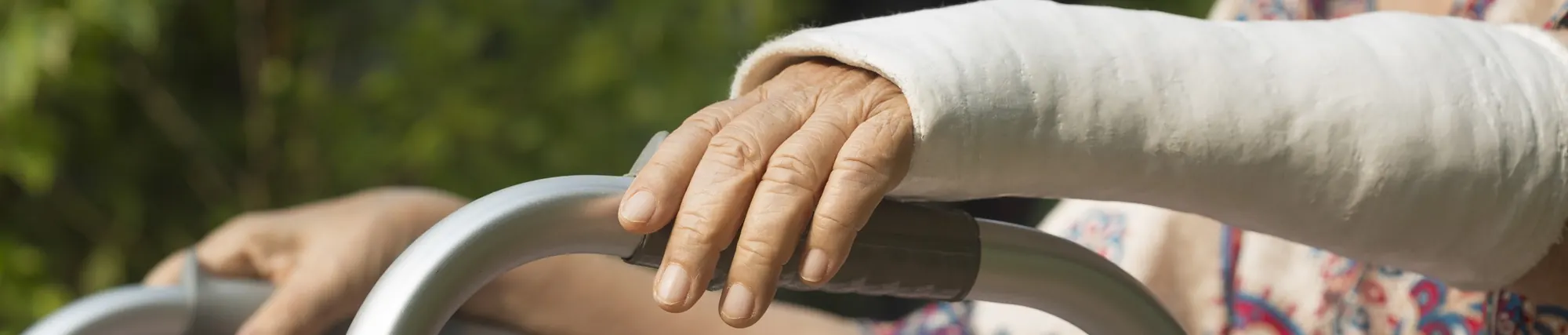
Elderly Broken Bones
Experienced Legal Help for Tulsa Nursing Home Residents With Preventable Fractures
As inconceivable as it may be, abuse in nursing homes is all-too-common. Some nursing home staff members are simply malicious and sadistic, while others may lose their tempers and take it out on an elderly resident. Nursing home staff may also fail in their basic duty to monitor patients, allowing them to come to physical harm via a preventable accident or an assault by another resident.
If your loved one resides in a nursing home and has unexplained broken bones, it may be a sign of nursing home abuse or neglect. Levinson Law, P.C., has years of experience helping nursing home residents and their families recover damages after abuse or neglect leads to broken bones or other harm. We are here to help you ensure that your loved ones are safe and secure and to seek the compensation your family is owed if negligent or abusive conduct by a nursing home leads to injury.
How do Broken Bones Happen in a Nursing Home?
Residents who rely on home health aides or reside in nursing homes, assisted living facilities, rehabilitation facilities, or other long-term care facilities are often more susceptible to injury than the average person. Residents are often elderly or disabled. They require additional care and attention in order to avoid injury. If they have an accident, such as a fall, a serious bone fracture is likely to occur. Moreover, if they are subjected to any form of physical abuse, the damage is likely to be severe.
Fractures in nursing homes can result from a variety of causes, including the following:
- Physical abuse by nursing home staff, other residents, or strangers off the street
- Improper lifting or moving a resident from a couch, bed, or wheelchair
- Failure to properly secure a resident in their wheelchair
- Slips, trips and falls due to unsafe flooring, wet surfaces, or staircase accidents
- Falling objects such as heavy clutter left unsecured in a resident’s room or on a shelf
- Giving residents inappropriate or slippery footwear
Do Not Let Nursing Homes Sweep an Injury Under the Rug
If you notice that your family member residing in a nursing home has unexplained fractures, it is important to ask the right questions. Do not let a facility brush aside your concerns by claiming that the resident has “brittle bones” or “osteoporosis,” or that they are so weak that the bones broke themselves. These are simply unacceptable answers and serve only to protect nursing homes from liability.
Rehabilitation facility staff, caregivers, nursing home staff, and other employees at long-term care facilities are well aware that their charges require additional care in order to avoid injury. They have a contractual, legal, and moral duty to keep residents safe. If they fail to do so, and your loved one suffers a broken bone as a result, the Tulsa nursing home fracture lawyers at Levinson Law, P.C., are ready to help you and your family seek compensation.
Hip Fractures in Nursing Homes
Broken hips are among the most serious injuries a nursing home resident can suffer. The Centers for Disease Control and Prevention reports that more than 300,000 older adults are hospitalized for hip fractures each year, and more than 95 percent of hip fractures are caused by falling, usually sideways.
Residents are at higher risk when they have lower-body weakness, balance problems, bone loss, vitamin D deficiency, poor vision or poor nutrition, or take medications such as sedatives, tranquilizers and antidepressants. Because these risks are well known, nursing homes are expected to:
- Review residents’ medications for side effects and interactions that affect balance;
- Install grab bars, railings and other fall prevention equipment;
- Supervise fall-prone residents when they stand, sit or walk;
- Provide walkers and other assistive devices; and
- Make sure residents are well fed and hydrated.
A broken hip usually means surgery and a long recovery. It can lead to lasting pain, loss of mobility, blood clots, pneumonia and depression, and residents who break a hip are more likely to fall again. When a facility failed to take these basic precautions, it can be held responsible. Learn more about nursing home falls.
Get Help from a Seasoned Lawyer Today
We understand how confronting nursing home abuse or neglect can be quite difficult for families. The attorneys at Levinson Law, P.C., will do everything we can to support you through this difficult time. If your elderly loved one experiences unexplained broken or fractured bones while residing in a nursing home or other assisted care facility, our nursing home neglect and abuse attorneys will help you investigate the facility and determine if abuse or negligence played a role. Please call Levinson Law, P.C., today to set up a free initial meeting, or use our website’s convenient contact form for a prompt, private response to your questions. Let us help you protect your family from nursing home negligence and abuse.