
Close Menu
Complimentary Consultations Available
Home > Blog > Motorcycle Accident > Tulsa Motorcycle Accident Attorneys: Protecting Riders’ Rights After a Crash

Tulsa Motorcycle Accident Attorneys: Protecting Riders’ Rights After a Crash

Tulsa motorcycle rider

Riding a motorcycle through Tulsa and Northeastern Oklahoma offers a sense of freedom that few other forms of travel can match. But that freedom comes with real risk. Motorcyclists have almost none of the protection afforded to occupants of a car or truck, and when a distracted, reckless, or negligent driver causes a crash, the results are often catastrophic. If you or a loved one has been hurt in a motorcycle accident, understanding your legal rights is one of the most important steps you can take toward recovery. Working with experienced Tulsa personal injury attorneys can make the difference between a fair settlement and a fight against an insurance company determined to pay as little as possible.

This guide walks through what Oklahoma law says about motorcycle accidents, the statistics behind the risks riders face, and the practical steps you should take if you or someone you love has been injured. Whether you’re searching for information after a recent crash or simply want to understand your rights as a rider, this resource is designed to help.

Tulsa motorcycle rider

Why Motorcycle Accidents Are Different From Other Crashes

Motorcycles make up a small share of vehicles on the road, but they are involved in a disproportionate share of serious and fatal crashes. Riders lack the structural protection of a vehicle frame, airbags, and seatbelts, which means even a relatively low-speed collision can cause life-altering injuries. Insurance companies are also well aware of these dynamics, and many adjusters approach motorcycle claims with an unspoken bias against riders, assuming recklessness or excessive speed before an investigation has even taken place. That’s one of many reasons why injured riders benefit from having a dedicated Tulsa motorcycle accident attorney in their corner from the earliest stages of a claim.

Tulsa’s road network adds its own layer of risk for riders. Major corridors like Interstate 44, the Broken Arrow Expressway, and Riverside Drive see heavy, fast-moving traffic throughout the day, while the city’s mix of older residential streets and newer commercial developments creates frequent intersections, driveways, and turning conflicts where a distracted or impatient driver can easily fail to notice an oncoming rider. Seasonal riders also tend to be more visible on Tulsa roads in the spring and summer months, when good weather draws more motorcycles onto highways and surface streets alike, often catching drivers who aren’t used to sharing the road with them off guard.

Motorcycle Accident Statistics in Oklahoma and Nationwide

The numbers tell a sobering story about motorcycle safety in Oklahoma and across the country. While motorcycles represent less than one percent of vehicle miles traveled nationally, they account for a strikingly large share of traffic fatalities.

  • According to national research compiled by TRIP, a nonprofit transportation research organization, there were 6,364 motorcyclist deaths across the United States in 2023, representing 16 percent of all traffic fatalities that year even though motorcycles accounted for well under one percent of total vehicle travel.
  • National motorcyclist fatalities rose by roughly 28 percent between 2018 and 2023, a period during which the share of riders not wearing a helmet also climbed, from about 20 percent in 2018 to nearly a quarter of riders by 2022.
  • Oklahoma’s Highway Safety Office has reported that the state regularly logs more than 1,200 motorcycle-involved crashes per year, with several hundred resulting in serious injury and dozens resulting in death annually.
  • In 2021, the most recent year with fully reported figures from several regional analyses, Oklahoma recorded approximately 1,450 motorcycle-involved crashes statewide, with roughly 5 percent of those crashes proving fatal.
  • Alcohol impairment is disproportionately common in fatal motorcycle crashes. State-level crash data reviewed by TRIP found that alcohol was a factor in about 26 percent of Oklahoma’s motorcycle fatalities, a higher rate than for any other type of vehicle involved in a fatal crash.
  • Traffic fatalities as a whole remain a significant public safety and economic issue in Oklahoma. TRIP’s 2024 report estimated that fatal and serious traffic crashes cost the state approximately $17.9 billion in economic and quality-of-life losses in a single year.

These figures make clear that motorcycle safety is not a marginal issue in Oklahoma. Riders face real, measurable risks every time they get on the road, and many of the crashes behind these statistics were preventable had another driver exercised reasonable care.

Common Causes of Motorcycle Accidents in Tulsa

Motorcycle crashes often share the same root causes as other traffic collisions, but the consequences for riders tend to be far more severe. Some of the most frequent causes our Tulsa motorcycle accident lawyers see include:

  • Left-turn collisions: One of the most common causes of motorcycle crashes involves a car or truck making a left turn in front of an oncoming motorcycle. Drivers often misjudge a motorcycle’s speed and distance, or simply fail to look for riders at all before turning.
  • Distracted driving: Texting, adjusting a navigation system, eating, or other distractions reduce a driver’s ability to notice a motorcycle in traffic, especially in blind spots or on multi-lane roads.
  • Following too closely: Motorcycles can stop more quickly than cars in certain conditions. A tailgating driver may not have enough time to react if a rider brakes suddenly.
  • Unsafe lane changes: Motorcycles are smaller and can be harder to spot than other vehicles, making them especially vulnerable when a driver changes lanes without properly checking mirrors and blind spots.
  • Dooring incidents: When a parked driver or passenger opens a car door into traffic without checking for approaching motorcycles, the rider may have little time to swerve or stop, leading to a serious crash.
  • Impaired driving: Alcohol and drug impairment continue to play an outsized role in fatal motorcycle crashes throughout Oklahoma, as noted in the statistics above.
  • Speeding: Excessive speed reduces a driver’s reaction time and increases the severity of any resulting collision, whether the speeding driver is in a car or on a motorcycle.
  • Road hazards: Potholes, gravel, uneven pavement, and debris pose a much greater danger to a two-wheeled vehicle than to a car, and poor road maintenance can sometimes create liability for a government entity.

Determining the cause of a crash is a critical part of any motorcycle injury claim, since Oklahoma law requires an injured rider to show that another party’s negligence caused the accident before compensation can be recovered.

Is Lane Splitting Legal in Oklahoma?

Riders sometimes ask whether “lane splitting,” or riding between lanes of slow-moving or stopped traffic, is legal in Oklahoma. It is not. Oklahoma law requires motorcycles to operate within a single lane of traffic, and lane splitting is generally treated as an unsafe or improper lane use. This matters for injured riders because it can affect how fault is assigned after a crash. If a rider was lane splitting at the time of a collision, an insurance company may argue that the rider bears some percentage of responsibility for the crash under Oklahoma’s comparative negligence rule, even if the other driver was also negligent. On the other hand, many crashes attributed to “aggressive riding” by insurance adjusters turn out, upon closer investigation, to have been caused primarily by another driver’s failure to yield, sudden lane change, or distracted driving. An experienced attorney can help sort out what actually happened rather than accepting an insurer’s initial narrative.

Common Injuries Suffered in Motorcycle Accidents

Because riders have little to shield them from the force of a collision, motorcycle accidents frequently result in injuries that are more severe than those seen in typical car accidents. Common injuries include:

  • Traumatic brain injuries and concussions
  • Spinal cord injuries and paralysis
  • Road rash and severe abrasions
  • Broken bones and fractures, particularly to the arms, legs, and pelvis
  • Internal organ damage and internal bleeding
  • Severe lacerations requiring surgery or skin grafts
  • Amputation or loss of limb function
  • Psychological trauma, including post-traumatic stress

The National Highway Traffic Safety Administration has found that unhelmeted riders face a substantially higher risk of traumatic brain injury than helmeted riders, and that helmets reduce the risk of a fatal head injury by roughly 37 percent for operators and about 41 percent for passengers. Even so, many of these injuries occur regardless of helmet use, given the sheer physical forces involved in a motorcycle-versus-vehicle collision.

Beyond the immediate physical trauma, many riders face long recovery timelines that stretch far beyond initial hospitalization. Fractures involving the pelvis or femur, for example, often require surgical repair followed by months of physical therapy before a rider regains full mobility. Traumatic brain injuries can affect memory, concentration, and mood long after visible wounds have healed, sometimes requiring ongoing cognitive therapy. Spinal cord injuries may permanently affect a rider’s ability to walk or work, requiring home modifications, assistive devices, and long-term personal care. Because the financial impact of these injuries can unfold over years rather than weeks, it’s important that any settlement or verdict accounts for future medical needs, not just the bills that have already been paid.

motorcycle helmet

Oklahoma’s Motorcycle Helmet Law

Many riders and their families have questions about Oklahoma’s helmet requirements, particularly after an accident. Unlike some states, Oklahoma is not a universal helmet law state. Under Title 47, Section 12-609 of the Oklahoma Statutes, only riders and passengers under the age of 18 are legally required to wear a helmet that meets federal safety standards. Riders who are 18 or older are legally permitted to ride without a helmet.

A few additional points about Oklahoma’s rules for motorcyclists are worth understanding:

  • All riders, regardless of age, are required to wear eye protection, such as goggles, glasses, or a face shield, unless the motorcycle is equipped with a windshield tall enough to protect the rider’s eyes.
  • Motorcycles must be equipped with a headlight that is illuminated at all times, even during daylight hours, along with two rearview mirrors.
  • Helmets worn by riders under 18 must meet U.S. Department of Transportation standards; novelty helmets that do not meet these standards do not satisfy the law.
  • Whether a passenger must wear a helmet depends on the passenger’s own age, not the age of the motorcycle’s operator.

It’s important to know that choosing not to wear a helmet as an adult rider is entirely legal in Oklahoma. That said, insurance companies sometimes attempt to use a rider’s decision not to wear a helmet as leverage to reduce or deny a claim, even when the lack of a helmet had nothing to do with causing the crash itself or relates only to the severity of a head injury rather than the underlying fault for the accident. An experienced motorcycle accident attorney can push back against these tactics and help ensure that a lawful, personal safety decision doesn’t unfairly undermine a rider’s right to compensation.

What To Do After a Motorcycle Accident

The steps you take in the hours and days following a motorcycle crash can have a significant impact on both your health and your ability to recover compensation later. If you are able to do so safely, consider taking the following actions:

  • Seek medical attention immediately. Some injuries, including internal bleeding and traumatic brain injuries, are not immediately obvious. Prompt medical care protects your health and creates a documented record connecting your injuries to the crash.
  • Call law enforcement to the scene. A police report provides an official, third-party account of the crash and often includes details about contributing factors, witness statements, and citations issued.
  • Document the scene. Photograph the vehicles involved, road conditions, weather, skid marks, and your visible injuries, if it is safe to do so.
  • Gather witness information. Names and contact information for anyone who saw the crash can be valuable later, since memories fade and witnesses can be difficult to locate after time has passed.
  • Avoid discussing fault at the scene. Even a casual apology can later be used by an insurance company to argue that you share responsibility for the crash.
  • Preserve your gear and equipment. Your helmet, riding gear, and the motorcycle itself may serve as important physical evidence in your claim.
  • Keep records of all expenses. Medical bills, repair estimates, and documentation of missed work all help establish the full scope of your damages.
  • Be cautious with insurance adjusters. Insurance companies may contact you quickly after a crash, sometimes offering a fast settlement that is far lower than the true value of your claim. Consulting a Tulsa personal injury attorney before signing anything or giving a recorded statement can protect your interests.

Understanding Fault: Oklahoma’s Comparative Negligence Rule

Oklahoma follows what is known as a “modified comparative negligence” rule, codified at Title 23, Section 13 of the Oklahoma Statutes. Under this rule, an injured rider can still recover compensation even if they share some degree of fault for the crash, as long as their share of fault is not greater than the fault of the other party or parties involved. This is sometimes referred to as the “51 percent rule,” because a rider found to be 51 percent or more at fault is barred from recovering any damages.

For riders who are found partially at fault, their compensation is reduced in proportion to their percentage of responsibility. For example, if a jury determines that a rider’s total damages are $100,000, but the rider was 20 percent at fault for the crash, the rider’s recoverable compensation would be reduced to $80,000.

Because insurance adjusters have a financial incentive to assign as much fault as possible to an injured rider, having a knowledgeable Tulsa motorcycle accident attorney investigate the crash, gather evidence, and advocate for an accurate allocation of fault is essential to protecting the full value of a claim.

Oklahoma’s Statute of Limitations for Motorcycle Accident Claims

Oklahoma law places strict time limits on how long an injured person has to file a personal injury lawsuit. Under Title 12, Section 95 of the Oklahoma Statutes, most personal injury claims, including those arising from motorcycle accidents, must be filed within two years of the date of the injury. If a claim is not filed within this window, the injured party may permanently lose the right to pursue compensation through the court system, regardless of how clear-cut the underlying negligence may be.

There are some limited exceptions and special circumstances that can affect this deadline:

  • Claims involving a government entity, such as a crash caused by a poorly maintained city or county road, are governed by the Oklahoma Governmental Tort Claims Act, which requires a formal notice of claim within one year of the incident and imposes additional procedural deadlines.
  • If the injured person is a minor, the two-year clock generally does not begin running until the minor turns 18, although a parent or guardian may still choose to file sooner on the minor’s behalf.
  • In some cases involving injuries that are not immediately discoverable, Oklahoma’s discovery rule may delay the start of the filing deadline until the injury is or reasonably should have been discovered.

Given how quickly evidence can disappear and memories can fade, riders are generally best served by consulting an attorney as soon as possible after a crash rather than waiting until a deadline is close to expiring.

Insurance Challenges Unique to Motorcycle Claims

Motorcycle accident claims often involve insurance issues that don’t come up as frequently in typical car accident cases. Understanding these issues ahead of time can help riders and their families avoid costly surprises.

  • Minimum liability coverage may not be enough. Oklahoma requires drivers to carry minimum liability insurance, but these minimum limits are often far lower than the actual cost of treating a serious motorcycle injury. When an at-fault driver’s policy limits are exhausted, an injured rider may need to look to other sources of recovery.
  • Uninsured and underinsured motorist coverage. Riders who carry uninsured/underinsured motorist (UM/UIM) coverage on their own policy may be able to recover additional compensation when the at-fault driver has no insurance or insufficient coverage to pay for the full extent of the rider’s injuries. Reviewing your own policy after a crash is an important step that is often overlooked.
  • Bias against motorcyclists. Some insurance adjusters approach motorcycle claims with an assumption that the rider was speeding, weaving, or otherwise behaving recklessly, even before any investigation has taken place. This bias can result in lowball settlement offers or outright denials that don’t reflect the actual facts of the crash.
  • Disputes over medical necessity. Insurers sometimes challenge whether certain treatments, surgeries, or ongoing therapies were medically necessary, particularly for injuries like traumatic brain injuries that aren’t always visible on standard imaging.
  • Quick settlement offers. Injured riders are sometimes offered a fast settlement shortly after a crash, before the full extent of their injuries and future medical needs is known. Accepting an early offer can permanently forfeit the right to seek additional compensation later, even if complications arise.

Because these issues can significantly affect the outcome of a claim, riders are well served by having an attorney review their own insurance policy, the at-fault driver’s coverage, and any settlement offer before accepting anything from an insurance company.

Types of Compensation Available After a Motorcycle Accident

Oklahoma law allows injured riders to pursue compensation for a range of losses connected to a motorcycle accident caused by another party’s negligence. Depending on the facts of the case, recoverable damages may include:

  • Medical expenses, including emergency treatment, hospitalization, surgery, physical therapy, and anticipated future medical care
  • Lost wages for time missed from work during recovery
  • Loss of future earning capacity for riders whose injuries prevent them from returning to their previous occupation
  • Property damage, including repair or replacement of the motorcycle and riding gear
  • Pain and suffering connected to the physical and emotional impact of the crash
  • Permanent disability or disfigurement, when injuries result in lasting impairment
  • Loss of consortium for spouses affected by a serious or fatal injury
  • Wrongful death damages for surviving family members when a motorcycle crash proves fatal

In cases involving especially reckless or intentional conduct, such as extreme intoxication, Oklahoma law may also allow for punitive damages, which are intended to punish the at-fault party rather than compensate the victim directly.

Why Riders Choose Levinson Law, P.C.

Motorcycle accident claims involve unique challenges that general personal injury cases may not, from combating bias against riders to navigating the specific evidence needed to reconstruct a high-speed collision. The Tulsa motorcycle accident attorneys at Levinson Law, P.C. focus on helping injured riders and their families pursue the full compensation they are owed under Oklahoma law.

When you work with the team at Levinson Law, P.C., you can expect:

  • A free, no-obligation initial consultation to evaluate your case
  • Attorneys who understand the tactics insurance companies use to minimize motorcycle injury claims
  • Thorough investigation of the crash, including police reports, witness statements, and physical evidence
  • Support in calculating the full value of your claim, including future medical needs and lost earning capacity
  • Attorneys who are prepared to take your case to trial if a fair settlement cannot be reached
  • A team that can meet with injured clients at their home or hospital room when travel to the office isn’t possible

As Tulsa personal injury attorneys serving clients throughout Northeastern Oklahoma, Levinson Law, P.C. is committed to standing up for riders whose lives have been upended by another driver’s negligence. Motorcycle crashes often lead to significant medical bills, lost income, and long recoveries, and injured riders shouldn’t have to navigate that process alone or accept a lowball settlement from an insurance company focused on its own bottom line.

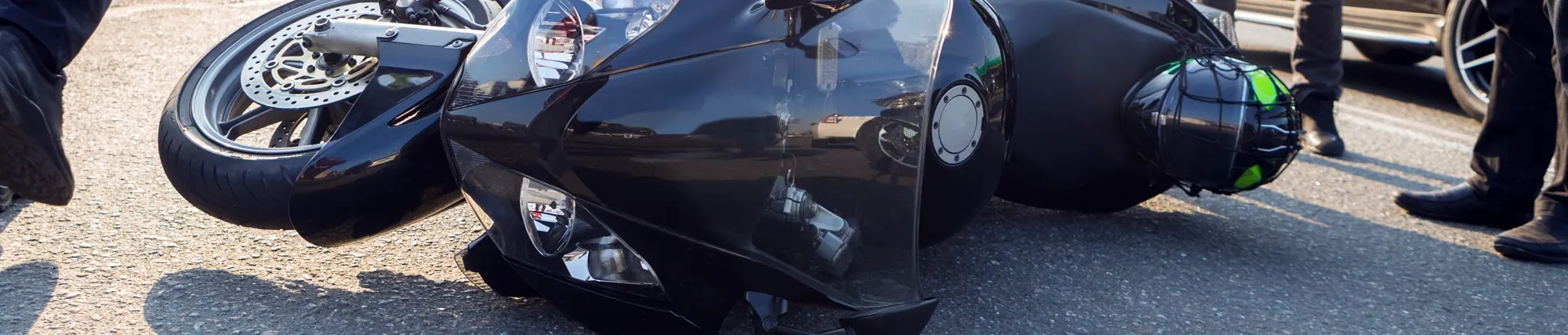
crashed motorcycle on the road in Tulsa

Frequently Asked Questions About Motorcycle Accident Claims in Oklahoma

Do I have a case if I wasn’t wearing a helmet?
Yes. Oklahoma law does not require riders 18 and older to wear a helmet, and choosing not to wear one does not automatically bar you from recovering compensation. However, insurance companies sometimes try to use this fact to argue that your injuries would have been less severe with a helmet, which is why experienced legal representation matters.

What if I was partially at fault for the crash?
Under Oklahoma’s modified comparative negligence rule, you can still recover damages as long as you were not more than 50 percent at fault. Your compensation would simply be reduced by your percentage of responsibility.

How long do I have to file a claim?
In most cases, Oklahoma law gives injured riders two years from the date of the accident to file a lawsuit. Claims involving government entities have shorter notice deadlines, so it’s important to act quickly.

What should I avoid saying to an insurance adjuster?
Avoid admitting fault, speculating about the cause of the crash, or agreeing to a recorded statement before speaking with an attorney. Insurance adjusters may use your own words to minimize your claim.

How much does it cost to hire a motorcycle accident attorney?
Many personal injury attorneys, including the team at Levinson Law, P.C., work on a contingency fee basis, meaning you generally do not pay attorney’s fees unless your attorney recovers compensation on your behalf. Ask any attorney you’re considering to explain their specific fee arrangement.

How long does a motorcycle accident claim take to resolve?
Every case is different. Straightforward claims with clear liability and well-documented injuries may settle within a few months, while more complex cases involving disputed fault, catastrophic injuries, or reluctant insurance companies can take a year or more, particularly if a lawsuit becomes necessary. Your attorney should be able to give you a realistic timeline based on the specifics of your case.

What if the at-fault driver didn’t have insurance?
If the driver who caused your crash was uninsured or underinsured, you may still be able to recover compensation through your own uninsured/underinsured motorist coverage, if you carry it. An attorney can review your policy to determine what coverage may apply.

Can I still file a claim if my loved one died in a motorcycle accident?
Yes. Oklahoma law allows certain surviving family members to pursue a wrongful death claim when a motorcycle crash proves fatal due to another party’s negligence. These claims can seek compensation for funeral expenses, lost financial support, and the loss of companionship, among other damages.

Do I need to go to court to resolve my claim?
Not necessarily. Many motorcycle accident claims are resolved through negotiation with the insurance company without ever going to trial. However, if the insurer refuses to offer a fair settlement, having an attorney who is prepared to file a lawsuit and take the case to trial can provide important leverage during negotiations.

Talk to a Tulsa Motorcycle Accident Attorney Today

If you or someone you love has been injured in a motorcycle accident in Tulsa or anywhere in Northeastern Oklahoma, you don’t have to face the insurance companies alone. The Tulsa motorcycle accident attorneys at Levinson Law, P.C. are ready to review the facts of your case, explain your legal options, and fight for the compensation you deserve. Contact Levinson Law, P.C. today to schedule your free consultation.

Levinson Law Personal Injury and Nursing Home Abuse Lawyers in Tulsa, Oklahoma Logo

Sources

  • TRIP (The Road Information Program), “Addressing America’s Traffic Safety Crisis,” Oklahoma news release, 2024
  • National Highway Traffic Safety Administration (NHTSA), motorcycle safety and helmet effectiveness data
  • Oklahoma Highway Safety Office (OHSO), motorcycle crash data
  • Oklahoma Department of Transportation (ODOT), Strategic Highway Safety Plan
  • Oklahoma Statutes, Title 47, Section 12-609 (motorcycle helmet law)
  • Oklahoma Statutes, Title 23, Section 13 (comparative negligence)
  • Oklahoma Statutes, Title 12, Section 95 (statute of limitations)
  • Oklahoma Governmental Tort Claims Act, Title 51, Sections 151-157
Facebook Twitter LinkedIn
  • facebook

© 2000 - 2026 Levinson Law, P.C. All rights reserved.

D2 Branding SEO and Digital Marketing in Tulsa