
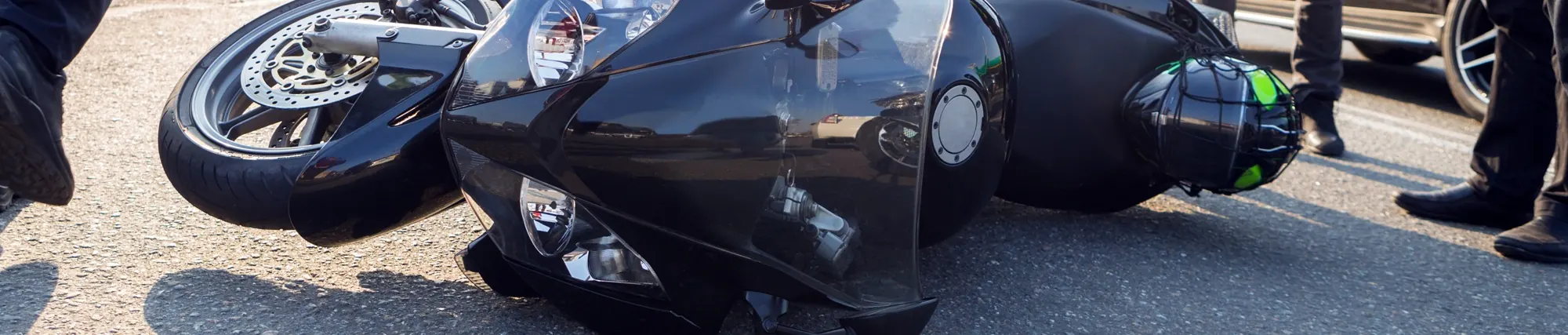

Riding a motorcycle always comes with a lot more risks than driving in a vehicle, as riders are far less protected in the event of a collision, are generally less visible to other road users, and are more vulnerable to road hazards. Riding motorcycles at certain times, however, is even more dangerous, with the National Highway Traffic Safety Administration (NHTSA) estimating that more than 40 percent of two-vehicle motorcycle crashes occur when it’s dark outside.
Poor Visibility
Because they are so much smaller than standard passenger sized vehicles, motorcycles are difficult to see even during the day. These problems are heightened at night, when riders are more at risk of not being seen. An inattentive driver could easily fail to see a rider until it is too late to avoid a collision. The dangers of low visibility are even more pronounced when the weather conditions are poor, when it’s harder for riders to see dangerous road hazards, like potholes, patches of ice, drifts of leaves, or to take note of undulating terrain or unexpected curves in the road. These issues all make it more likely that a rider will be involved in a single-vehicle collision or a crash with another vehicle.
Driving Under the Influence
Safety experts have found a correlation between the number of motorcycle accidents that occur at night and incidences of drunk driving. In fact, motorcycle accidents are three times more likely to involve an intoxicated driver when they occur at night. That’s why it’s so important for riders and motorists alike who are traveling at night to remain vigilant for signs of drunk driving, such as weaving in and out of lanes, driving too slowly, or swerving. Intoxicated drivers have impaired vision, slower reaction times, and poorer judgment and so are much more likely to engage in reckless driving practices, like speeding and tailgating.
Distracted and Fatigued Driving
Driving while distracted is always dangerous to other road users. Unfortunately, both distraction and fatigue often increase when it’s dark and visibility is already reduced, making the chances that a motorcyclist will be involved in an accident even higher. Drowsy driving and driving while distracted can be just as dangerous as driving under the influence, with fatigued and distracted drivers experiencing slowed reaction times and impaired judgment. Not only does this mean that they are more likely to cause an accident, but that any resulting accidents they do cause will be more serious. These kinds of crashes often occur at high speeds, with little or no attempt by the at fault driver to slow or attempt to avoid the collision.
The Most Dangerous Hours to Ride
Darkness is not the only time factor. Federal crash data compiled by the Insurance Information Institute show that, in 2023, weekday motorcyclist deaths peaked between 3:00 and 6:00 p.m., during the afternoon and evening rush hour, when roads are most crowded. On weekends, deaths peaked between 6:00 and 9:00 p.m., as daylight fades. Across the whole week, the 6:00 to 9:00 p.m. window saw more motorcyclist deaths than any other three-hour period, and weekend nights saw more late-night deaths than weeknights. According to the National Highway Traffic Safety Administration, 39 percent of motorcyclist deaths in 2023 happened in the dark.
At dusk and after dark, riders have more trouble seeing hazards such as potholes and standing water, and both riders and drivers have more trouble judging distance and speed. Drivers are also less likely to see a motorcycle in time to avoid it.
Reducing Your Risk
Serious crashes can happen at any hour, even in ideal conditions, so no time of day is truly safe. Riders can lower the risk by:
- Keeping the headlight on and wearing bright or reflective gear;
- Watching for drivers waiting to turn left, and being ready if they turn anyway;
- Not riding when tired, distracted or impaired; and
- Taking a motorcycle safety course to sharpen their skills.
These steps cannot guarantee a rider’s safety, but they can help prevent a crash. For more on what to do after a crash and how claims work, see our Oklahoma motorcycle accident guide.
Reach Out to a Dedicated Tulsa Motorcycle Accident Attorney
For help seeking compensation after a nighttime motorcycle accident, please call Levinson Law, P.C. at 918-492-4433 and set up a meeting with one of our experienced and compassionate Tulsa motorcycle accident attorneys today. We can even travel to meet you if you are unable to make it to our office because of your injuries.
Sources:
crashstats.nhtsa.dot.gov/Api/Public/ViewPublication/810834
forbes.com/advisor/legal/motorcycle-accident-statistics/