
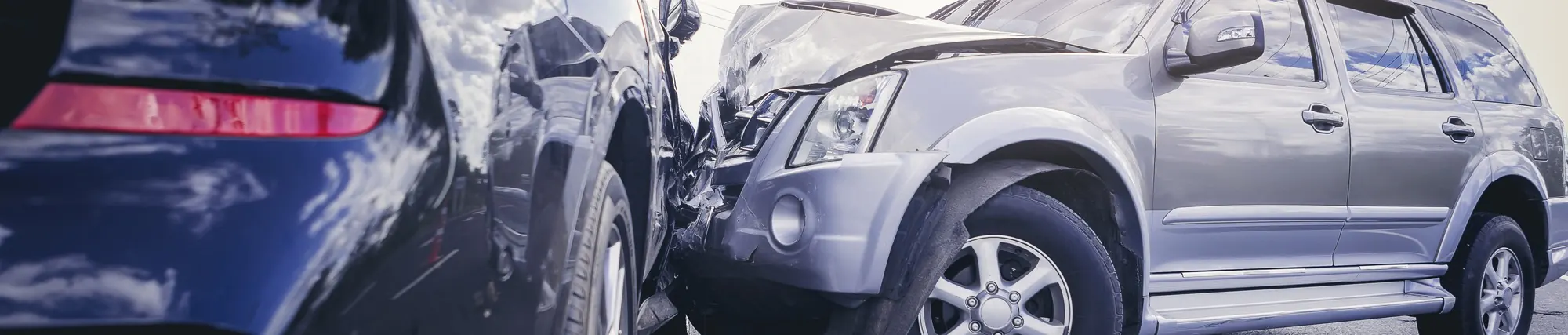

The minutes and days after a car accident are confusing, and it is easy to miss a step that matters later. This guide explains what to do after a car accident in Oklahoma, the evidence that helps prove what happened, the deadlines that apply and how to protect your claim. It is general information, not legal advice about your case.
In this guide
- At the scene
- Get medical care, even if you feel fine
- Evidence that helps prove your claim
- Dealing with insurance companies
- If the other driver has no insurance
- Special situations: rental cars
- Mistakes that can hurt your claim
- Oklahoma laws and deadlines
- Talk to a Tulsa car accident lawyer
At the scene
- Stop and check for injuries. Oklahoma law requires drivers involved in a crash that causes injury, death or damage to an occupied vehicle to stop, give reasonable help to anyone hurt and stay until they have exchanged information.
- Call 911. Police must be notified of a crash that causes injury or death, and it is wise to call even after a smaller crash. Officers document the scene, the vehicles, the road and weather conditions and witness statements, and their report is often one of the first things an insurer reviews.
- Exchange information. Get the other driver’s name, address, phone number, driver’s license number, plate and registration number, and insurance company and policy number.
- Photograph everything. Use your phone to take wide shots and close-ups of all vehicles from several angles, skid marks, debris, damaged signs or guardrails, traffic signals, street signs, the road surface, the weather and your injuries.
- Find witnesses. Write down names and phone numbers of anyone who saw the crash. Witnesses can be hard to find later.
- Look for cameras. Note any businesses, homes with doorbell cameras or traffic cameras that may have recorded the crash.
Get medical care, even if you feel fine
After a crash, the body releases adrenaline and other stress hormones that can mask pain for hours. Some serious injuries, such as concussions, internal bleeding and spinal injuries, may not cause obvious symptoms at first, and others, like whiplash and back injuries, often get worse over the following days. Getting checked by a doctor promptly protects your health and creates a record that ties your injuries to the crash.
Waiting can also hurt your claim. Insurers often argue that a person who waited days or weeks to see a doctor was not really hurt, or was hurt by something else. Follow your doctor’s treatment plan and keep every appointment.
Evidence that helps prove your claim
Most car accident claims turn on two questions: who was at fault, and how badly you were hurt. Useful evidence includes:
- The police report, with the officer’s findings, diagram, citations and witness statements.
- Photographs and video from the scene, taken as soon as possible.
- Surveillance and traffic camera footage. Businesses and agencies often keep video for only days or weeks before it is recorded over, so a written request to preserve it should be sent quickly. If the owner will not cooperate, a court subpoena may be needed.
- Dash camera video from your vehicle or others.
- Vehicle data. Most newer vehicles have an event data recorder that stores information such as speed, braking, steering, seat belt use and airbag deployment in the moments around a crash.
- Cell phone records, when there is reason to believe the other driver was texting or on the phone.
- Witness statements.
- Medical records and bills, plus proof of missed work such as pay stubs.
- Repair estimates and receipts for towing, rental cars and other out-of-pocket costs.
Dealing with insurance companies
Report the crash to your own insurer promptly; most policies require prompt notice. Give accurate facts, but do not guess about fault or the extent of your injuries.
The other driver’s insurer may call quickly and ask for a recorded statement. You are not required to give one, and it is wise to talk with a lawyer first. Adjusters may use your words to argue that you were partly at fault or not seriously hurt. Be cautious about early settlement offers as well. A quick offer usually comes before anyone knows the full cost of your injuries, and once you sign a release, you generally cannot ask for more.
Oklahoma is an at-fault state. The driver who caused the crash, and that driver’s insurer, are responsible for your losses. Oklahoma’s minimum liability limits are $25,000 per person and $50,000 per accident for bodily injury, and $25,000 for property damage, which is often not enough to cover a serious injury.
If the other driver has no insurance
Every Oklahoma driver must carry liability insurance, but many do not. If the driver who hit you is uninsured or does not have enough insurance, uninsured/underinsured motorist (UM/UIM) coverage on your own policy may pay the difference, up to your policy limits. UM/UIM coverage may also apply after a hit-and-run. If you have medical payments coverage, it can help with medical bills regardless of fault. You may also be able to sue an uninsured driver personally, although collecting from an individual can be difficult. A lawyer can review your policies to find every available source of coverage.
Special situations: rental cars
If you were driving a rental car, the rental agreement may make you responsible for damage to the car even if another driver caused the crash, unless you bought the rental company’s coverage. Your own auto policy or the credit card you used may cover some of it. When the other driver was at fault, those costs, and your injuries, can be claimed against that driver’s insurer.
Mistakes that can hurt your claim
- Apologizing or discussing fault at the scene. Even a polite apology can be treated as an admission.
- Skipping or delaying medical care.
- Posting on social media. Insurers and defense lawyers look at social media. A photo of you at a friend’s house, or an old photo posted recently, can be used to argue that you are not hurt. Set accounts to private, do not post about the crash or your activities, and ask friends not to tag you until your claim is resolved.
- Repairing or disposing of your car before it has been photographed and inspected.
- Accepting the first offer or signing a release without understanding it.
- Waiting too long to act on deadlines.
Oklahoma laws and deadlines
Comparative fault
Oklahoma uses a modified comparative negligence rule. If you were partly at fault, your compensation is reduced by your share of fault, and you cannot recover if your fault is greater than that of the others responsible. For example, if your damages total $100,000 and you are found 20 percent at fault, you may recover $80,000.
Following too closely
Drivers must leave enough room to stop safely, and the following driver in a rear-end crash is usually found at fault. Tailgating drivers have less time to react, and heavier vehicles and worn tires or brakes need even more distance to stop. There can be exceptions, such as when the front driver cut in suddenly or stopped for no reason.
Deadlines
- Lawsuits: most personal injury and property damage lawsuits must be filed within two years of the crash (12 O.S. § 95).
- Government vehicles and roads: claims against a city, county or state agency require a written notice of claim within one year under the Governmental Tort Claims Act.
- Insurance claims: insurance policies have their own notice requirements, often requiring prompt reporting.
To learn what compensation may be available, see damages available after an Oklahoma car accident.
Talk to a Tulsa car accident lawyer
If you were hurt in a crash in Tulsa or anywhere in northeastern Oklahoma, the car accident lawyers at Levinson Law, P.C. can gather the evidence, deal with the insurance companies and work to get you full compensation. If your injuries keep you from coming to our office, we can come to you. Call 918-492-4433 or contact us online to set up a free consultation.